
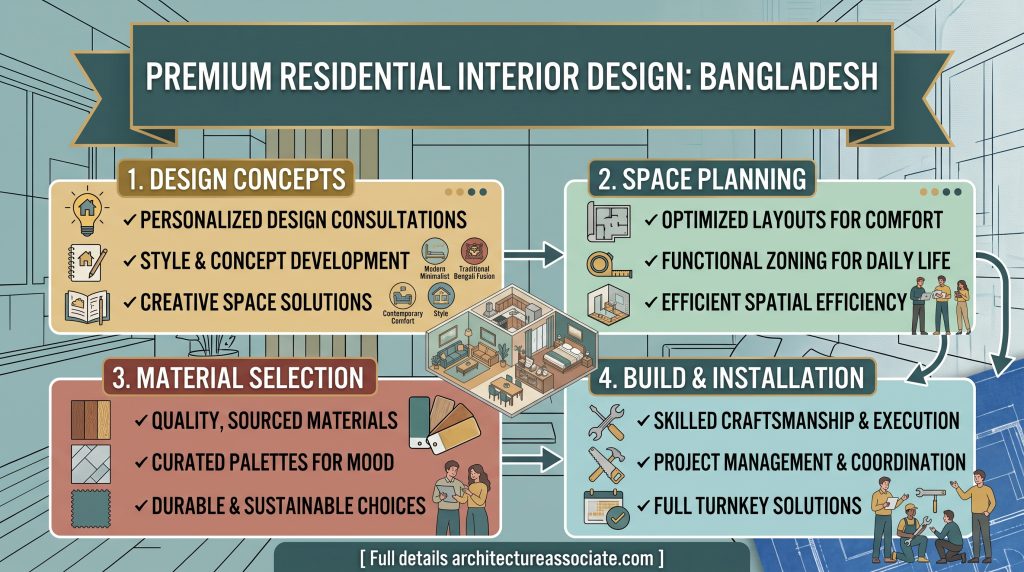
Residential Interior Design in Bangladesh is changing fast. Families in Dhaka, Chattogram, Sylhet and other growing cities now expect homes that look refined and also work hard every day. A beautiful sofa means little if the living room has no space to walk, and a stylish wardrobe is a poor investment if the bedroom still feels cramped.
This guide explains how Residential Interior Design works, what it costs to plan, and how to avoid the mistakes that waste money. Whether you are furnishing a new flat, renovating a family home or planning a duplex, the principles below will help you decide with confidence.
Quick Facts About Residential Interior Design
| Topic | What You Should Know |
|---|---|
| Best for | Apartments, duplex houses, villas, renovations |
| Core stages | Consultation, measurement, space planning, concept, 3D views, execution, handover |
| Key priorities | Layout, storage, lighting, ventilation, durable materials |
| Cost drivers | Area, finishes, custom furniture, ceiling and electrical work |
| Biggest mistake | Buying furniture before planning the layout |
Key Takeaways
- Strong Residential Interior Design begins with space planning, not décor.
- Bangladesh’s humidity, monsoon and heat should shape every material choice.
- Custom storage often gives better value than loose furniture in compact apartments.
- Layered lighting changes how a room feels at every hour.
- A defined scope and budget before execution prevents most cost overruns.
What Is Residential Interior Design?
Residential Interior Design is the professional planning of living spaces so they are comfortable, safe, organized and personal. It covers far more than decoration. A designer studies how your household moves through the home, where you cook, rest, study, pray and welcome guests, and then shapes the interior around those habits.
In practice, Residential Interior Design combines several disciplines. Space planning decides the layout. Furniture design and joinery add storage and function. Lighting and electrical planning control mood and usability. Finishes, color and texture give the home its character. Project management turns drawings into a finished space.
The word “residential” matters because homes differ from offices or restaurants. A home must suit different ages, routines and moods, often under one roof. Good Residential Interior Design respects that complexity instead of copying a showroom.
Why Residential Interior Design Matters in Bangladesh
Homes in Bangladesh carry unusual demands. Land is expensive, so apartments are compact. Joint families often share space, and guests visit frequently, especially during Eid and family occasions. Many households also need a prayer corner, extra storage for seasonal items and a kitchen that handles heavy daily cooking.
Climate adds another layer. High humidity, heavy monsoon rain and strong summer heat affect timber, paint, fabrics and electrical fittings. A design that ignores these conditions may look impressive in photographs and then peel, swell or stain within a few seasons.
This is where professional Residential Interior Design earns its value. A planned interior balances beauty with durability, reduces rework and helps you use every square foot properly. If you are comparing providers, our overview of interior design in Bangladesh explains what to expect from an experienced studio.
The Foundation: Space Planning
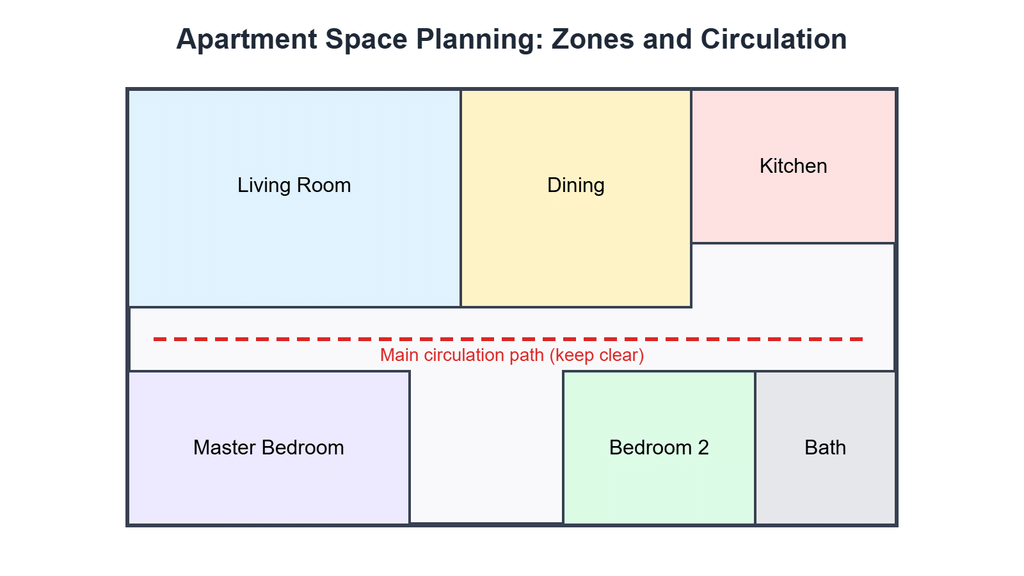
Every successful project starts with the floor plan. Before choosing colors, a designer measures the property and records doors, windows, beams, columns, plumbing points and electrical locations. These fixed elements decide what is possible.
Good space planning answers practical questions. How wide should walkways be? Where should the television sit so glare does not spoil the view? Can the dining area double as a study space? Should the master bedroom include a dressing zone or a compact walk-in wardrobe?
Strong Residential Interior Design treats circulation as seriously as furniture. A room can contain every item you love and still feel awkward if people cannot move naturally. As a simple rule, leave comfortable clearance around beds, sofas and dining chairs, and avoid placing tall units where they block daylight.
Think about the future as well. A young couple may later need a nursery. Parents may move in. A study may become a home office. Flexible planning keeps your investment useful for years.
Apartment Interior Design: Making Compact Homes Feel Larger
Apartments dominate urban housing in Bangladesh, and most arrive with fixed layouts and limited storage. Apartment-focused Residential Interior Design therefore concentrates on efficiency. If you are planning a flat, our dedicated guide to apartment interior design goes deeper into layouts and furniture sizing.
Living and dining areas. Open the visual flow between living and dining zones where the structure allows. Use furniture in proportion to the room. A slim console, a wall-mounted television unit and a compact sofa leave more floor visible, which makes the space feel larger.
Bedrooms. Calm bedrooms need soft lighting, controlled color and enough storage. Full-height wardrobes use wall height efficiently. A storage bed or a window-side bench can hold bulky bedding that would otherwise crowd the room.
Kitchens. A practical kitchen follows a logical work path between the cooker, sink and refrigerator. Adequate countertop space, strong ventilation, moisture-resistant cabinetry and task lighting matter more than expensive handles.
Balconies. Do not ignore them. A small seating corner, a green wall or a utility screen turns an unused strip into a useful extension of the home.
Duplex House Interior Design: Connecting Two Floors
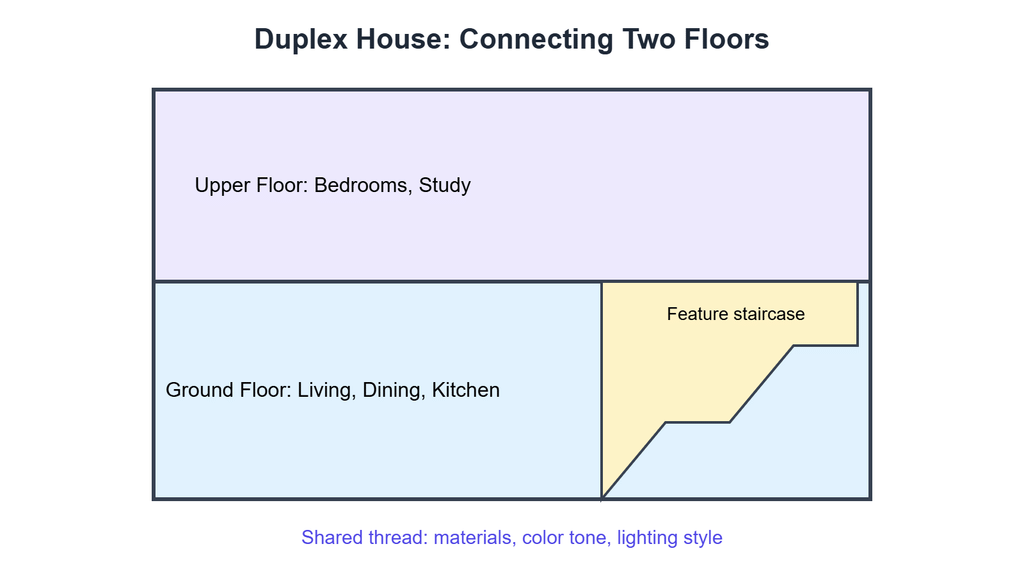
A duplex offers architectural freedom, but it also asks for stronger planning. The challenge is making two or more levels feel like one home while giving each floor its own purpose. Our guide to duplex house interior design covers this in more detail.
Typical duplex features include double-height living rooms, feature staircases, formal and family sitting areas, several bedrooms, a prayer room, a study and terraces. In Residential Interior Design for duplexes, designers often repeat a material, a color tone or a lighting style across floors to create continuity.
The staircase deserves special attention. Instead of treating it as a passage, integrate wall lighting, a refined railing, a textured feature wall or storage beneath the steps. A double-height void can host a statement chandelier or a vertical garden, provided maintenance access is planned early.
Privacy also matters. Keep guest-facing areas on the lower level and private bedrooms upstairs, with acoustic separation where possible. These decisions are easier to make during planning than after construction.
Lighting: The Element That Changes Everything
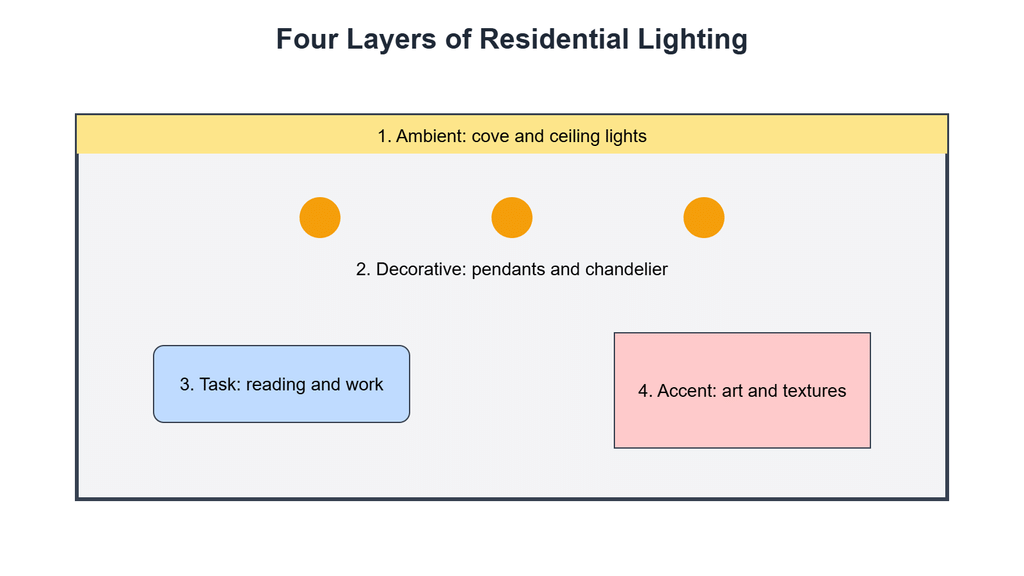
Lighting shapes how a room feels in the morning, at noon and at night. Layered lighting is one of the most valuable parts of Residential Interior Design, and it combines four types:
- Ambient lighting provides general illumination through ceiling lights or cove strips.
- Task lighting supports activities such as cooking, reading and grooming.
- Accent lighting highlights artwork, textures or architectural details.
- Decorative lighting adds personality through pendants, chandeliers and wall lamps.
Each room needs a different mix. Kitchens benefit from bright, shadow-free task lighting under cabinets. Bedrooms work best with warm, dimmable light. Living rooms often combine cove lighting with spotlights and a decorative centerpiece.
Do not forget natural light. Curtain choice, mirror placement and wall color all affect how daylight travels. Plan electrical points early, because moving them after finishing is costly and messy.
Storage and Custom Furniture
Storage is where many homes fail. A tidy home depends on places for shoes, books, appliances, linens, documents and seasonal items. Thoughtful Residential Interior Design builds storage into the architecture of the room instead of adding loose furniture later.
Common custom solutions include:
- Floor-to-ceiling wardrobes
- Shoe cabinets near the entrance
- Wall-mounted television and display units
- Study desks with integrated shelving
- Storage beds and window seats
- Kitchen pull-outs and corner organizers
Custom joinery uses vertical space and fits odd corners that ready-made furniture cannot. However, every cabinet should have a purpose. Excess units reduce usable floor area and make rooms feel heavy. Measure what you actually own, then plan around it.
Choosing Colors and Materials for Bangladesh’s Climate
Color sets mood. Light neutrals make rooms feel open and calm, while deeper shades add warmth and depth. Match your palette to room size, daylight and furniture. A north-facing room may need warmer tones, while a bright south-facing space can handle cooler shades.
Materials need extra thought here because of humidity and heat. Consider these points:
- Use moisture-resistant boards and proper edge sealing for kitchens and bathrooms.
- Choose quality laminates, veneers and paints suited to humid conditions.
- Select tiles with good slip resistance for wet areas.
- Pick fabrics that resist mildew and fading.
- Choose hardware with a reliable finish that resists corrosion.
The strongest Residential Interior Design repeats a limited set of finishes across rooms. That repetition produces a unified design language and keeps the home from feeling like a collection of unrelated ideas.
Residential Interior Design Trends Worth Considering
Current homeowners favor clean lines, natural textures, warm lighting, simple furniture forms and integrated storage. Biophilic ideas, such as indoor plants, timber finishes and generous daylight, add warmth and a sense of calm.
Still, trends should serve you rather than lead you. Use them in elements that are easy to change, such as accessories, textiles and paint, while keeping the structure of the interior timeless. That approach keeps your Residential Interior Design relevant for many years.
How a Residential Interior Design Project Works
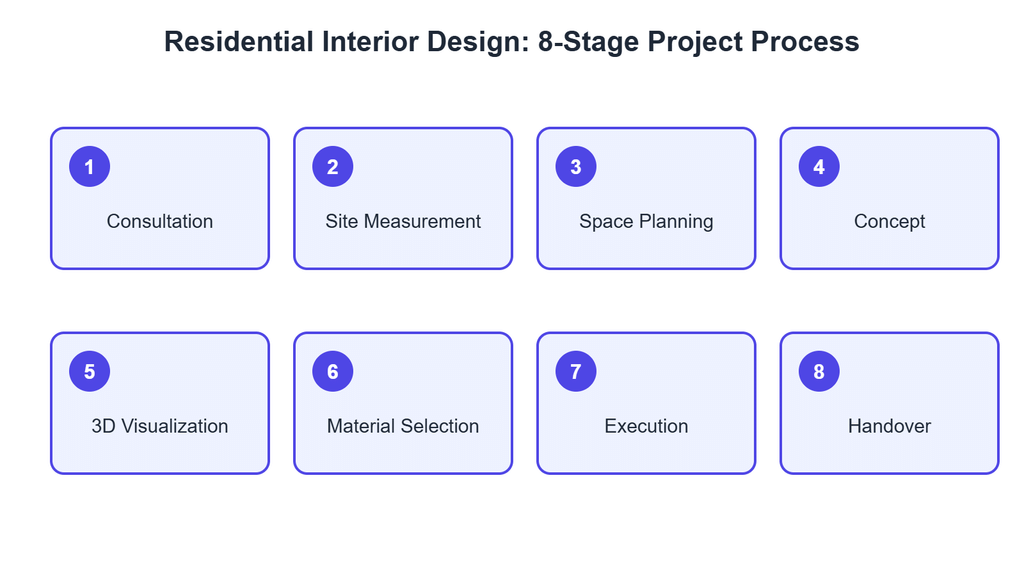
Knowing the process helps you stay in control. A professional project usually moves through these stages:
- Consultation. The designer learns about your household, lifestyle, preferred style and budget.
- Site measurement. Accurate measurement and a review of structure, plumbing and electrical points.
- Space planning. Layout options, circulation and storage strategy.
- Concept development. Mood, color, materials, furniture style and lighting direction.
- 3D visualization. Realistic views that let you see the result before work begins.
- Material selection. Final choices of finishes, fittings, fixtures and hardware.
- Execution. Coordinated carpentry, electrical work, ceiling, painting, flooring and installation.
- Handover. A final inspection to confirm the finished space matches the approved design.
Skipping early stages usually creates expensive corrections later. A well-run Residential Interior Design project spends time planning so that execution runs smoothly.
What Affects the Cost of Residential Interior Design?
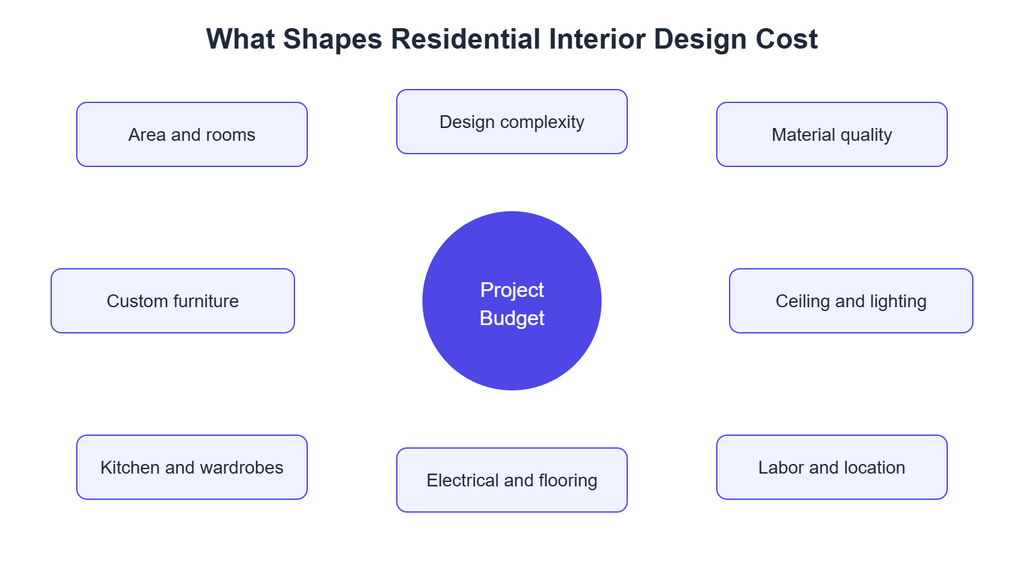
No honest studio can quote a fixed price without seeing the property. The cost of Residential Interior Design in Bangladesh depends on several factors:
- Total area and number of rooms
- Design complexity and level of customization
- Quality of materials and finishes
- Amount of custom furniture and cabinetry
- Ceiling, lighting and electrical work
- Kitchen and wardrobe specifications
- Labor, installation and project location
A simple flat with basic finishes will need a very different budget from a luxury duplex. Ask for a written scope and an itemized estimate. If your budget is limited, prioritize structural and functional work first, such as storage, lighting and the kitchen, then add decorative layers over time.
How to Choose an Interior Design Company in Bangladesh
The company you hire influences your home’s appearance, budget and timeline. Use these checks before you commit:
Review completed projects. Look at finished homes, not only concept renders. Execution quality tells you more than a polished image.
Judge the design approach. A good designer asks questions about your routine before proposing anything. Be careful with anyone who pushes one style onto every client.
Test communication. You should receive clear explanations of materials, timelines, costs and changes.
Ask about materials and workmanship. Request details on boards, hardware, finishes and joinery methods.
Confirm project management. Carpenters, electricians and suppliers must work to one schedule.
Expect budget transparency. Scope, payment stages and variations should be agreed in writing.
For perspective on how architects and designers think about space and form, the editorial work at Architecture Associate is a useful reference for homeowners who want to understand design principles before meeting a studio.
Common Residential Interior Design Mistakes to Avoid
Most regrets come from a short list of avoidable errors:
- Buying furniture before finalizing the layout.
- Underestimating storage needs.
- Relying on a single ceiling light per room.
- Ignoring ventilation and moisture in kitchens and bathrooms.
- Choosing materials only by appearance.
- Copying trends that do not suit the home’s size or light.
- Starting execution without an approved design and budget.
Avoiding these mistakes protects both your budget and your comfort. Careful Residential Interior Design is largely about preventing problems before they become expensive.
Beyond the Home: Related Interior Design Services
Many clients who start with a home later ask about other spaces. The same planning discipline applies, with different priorities.
- Commercial interior design: Brand-focused spaces that support customers and staff. See our page on commercial interior design.
- Office interior design: Layouts that improve focus, collaboration and comfort. Explore office interior design and our guide to office interior design in Bangladesh.
- Restaurant interior design: Atmosphere, kitchen flow and seating efficiency, covered in our restaurant interior design service.
- Hospitality interior design: Hotels, resorts and guest spaces where comfort and experience come first. Learn more about hospitality interior design.
If you are looking at the broader picture of home interior design, our team can combine these ideas into one coherent plan.
Why Choose Core Designers for Residential Interior Design?
Core Designers is an interior design company in Bangladesh that approaches every home as a unique brief. Our Residential Interior Design process starts by understanding the people who live in the space, then builds the plan around their routines, budget and taste.
We handle the complete journey: layout planning, furniture and joinery, lighting, finishes, execution and handover. That single point of responsibility keeps communication clear and reduces the gaps that cause delays. You can see our full residential interior design service for scope details and project examples.
Frequently Asked Questions About Residential Interior Design
What is Residential Interior Design?
Residential Interior Design is the planning and execution of interiors for homes. It covers layout, furniture, lighting, color, materials, storage and project management so that a house or apartment becomes comfortable, functional and personal.
How much does Residential Interior Design cost in Bangladesh?
The cost depends on property size, number of rooms, material quality, custom furniture and the amount of ceiling and electrical work. Because every home differs, a site visit and a written scope are the only reliable ways to get an accurate estimate.
Is professional design worthwhile for a small apartment?
Yes. Small apartments gain the most from careful planning because storage, circulation and furniture size all affect how spacious the home feels.
How long does a home interior project take?
Timelines vary with size, customization and material availability. A single room takes far less time than a full apartment or duplex, and early approval of designs and materials keeps schedules realistic.
Can I design my interior around a fixed budget?
Yes. A designer can prioritize essential work, recommend suitable materials and phase decorative items so the result stays within your limit.
Does Residential Interior Design include furniture?
It can. Depending on the scope, it may include custom wardrobes, television units, kitchen cabinets, beds, shelving and other built-in pieces, plus guidance on loose furniture.
Which materials work best in Bangladesh’s humid climate?
Moisture-resistant boards, sealed edges, quality laminates and veneers, corrosion-resistant hardware and mildew-resistant fabrics perform better in humid and monsoon conditions.
Plan a Home That Truly Works for You
A good home supports daily life quietly. It stores your belongings, welcomes your guests, stays comfortable in the heat and feels like yours. Thoughtful Residential Interior Design brings these qualities together through planning, not guesswork.
If you are ready to begin, gather your floor plan, preferred style, approximate budget and a list of what your household needs most. Then speak with a team that will listen first. Contact Core Designers to start a Residential Interior Design project for your apartment, duplex or family home in Bangladesh.